 English
 Español
 عربى
عربى1. Space Efficiency: How Does an Expandable Container House Maximize Living Area? Expandable container houses are a re...
READ MOREPortable Container Structures: Types, Applications, and Buying Guide for 2026
Update:01 Oct 2026
When a project manager needs usable floor space on a site that still has no power, no plumbing, and no finished ground, a portable container structure can move that conversation from weeks to days. The unit arrives on a truck, unfolds or bolts together, and provides a functional building for crews, equipment, or customers. When the job ends or the lease lapses, the same structure disassembles and travels to the next location.
This is the core value of portable container structures: they turn temporary space into a predictable procurement decision instead of an unpredictable construction project.
What a Portable Container Structure Actually Means
A portable container structure is a factory-manufactured steel building unit designed for repeated relocation. Unlike a standard shipping container, which is built to be hoisted and moved only when logistics requires, a portable structure is engineered so the building itself can be folded, stacked, or unbolted and reassembled at the next destination.
The four structural families
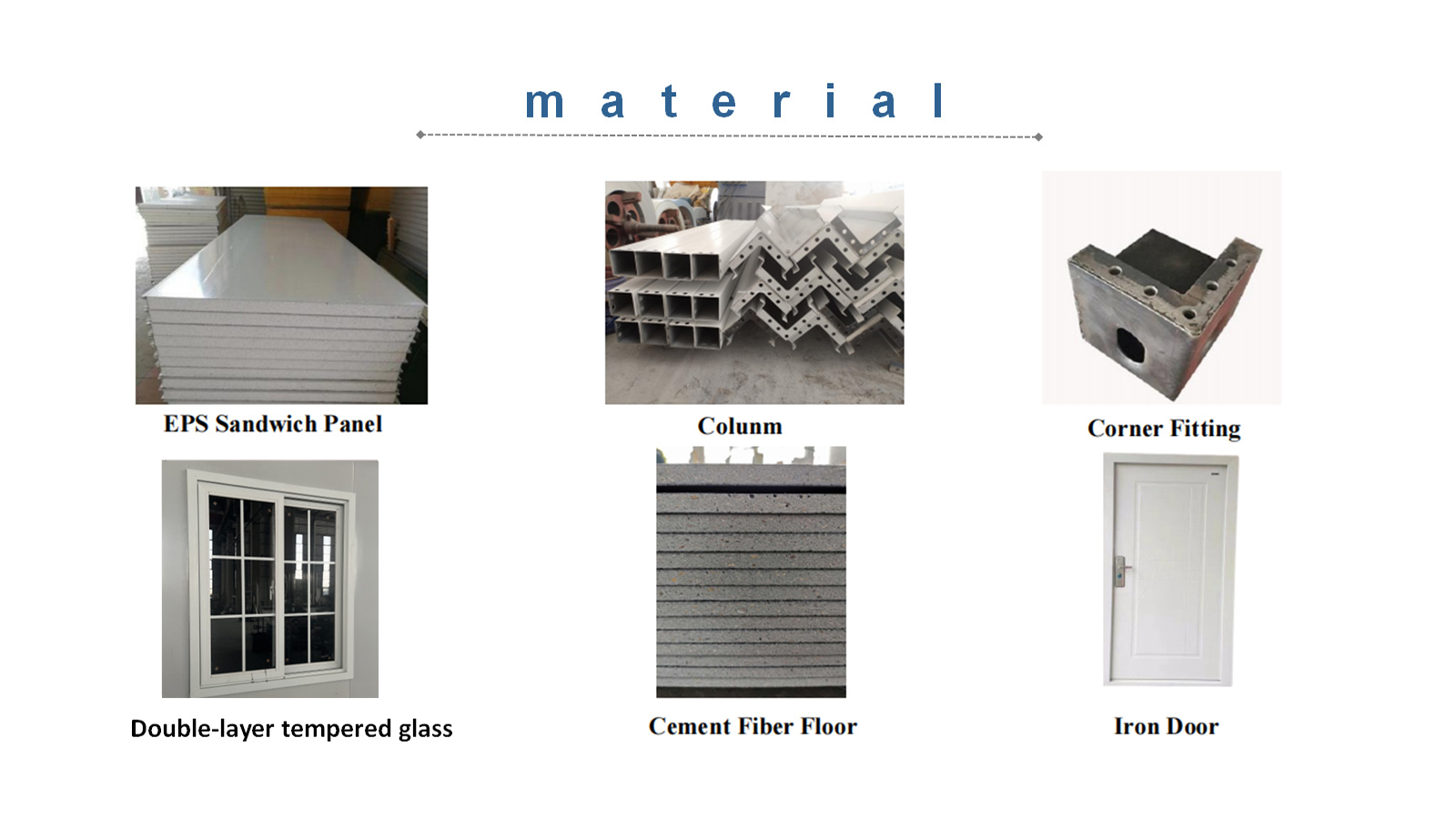
- Folding container houses fold into a compact block, usually about one-fifth of their open volume, and unfold on site in a few hours.
- Flat-pack container houses ship as stacked panels and assemble with bolts, offering a better strength-to-weight ratio for long-distance transport.
- Expandable container houses increase floor area by extending side wall panels, creating usable space for retail, accommodation, or offices.
- Detachable container houses are built from bolted modular parts that can be separated for shipping and reattached without welding.
What every portable model has in common
All of these families share a rigid steel frame, pre-insulated wall panels, and a transport-safe footprint. The practical consequence is lower fixed cost per location. A unit that folds or packs flat can be reused across multiple projects, while a permanently installed structure has no residual value after the first job ends.
Where Portable Container Structures Do the Most Work
Portable container structures are used across the whole spectrum of "need space now" projects. The dominant scenarios are:
- Construction worksites: crews need offices, break rooms, and sleeping quarters during the build.
- Industrial project sites: factories need temporary dormitories and storage for tools or materials.
- Retail: brands want pop-up shops placed in a parking lot or sidewalk without rebuilding the unit.
- Tourism and hospitality: resorts add a cabin or a dozen cabins without disturbing the natural ground.
- Education and public service: schools expand classrooms while permanent wings are under construction.
The following table summarizes the typical match between use case and structure type.
| Use case | Typical format | Why it fits |
|---|---|---|
| Worksite office | 20ft flat-pack or folding | Low transport weight, fast setup |
| Crew dormitory | 40ft detachable | High room count at economical cost |
| Pop-up store | 20ft expandable | Large glazed front opens to street |
| Warehouse | 40ft corrugated | Robust steel skin protects goods |
"For most buyers, the real question is not what the building looks like on day one, but what it costs across five moves."
Key Selection Criteria for Portable Container Structures
Before ordering a portable container structure, the criteria below will decide whether the unit performs on your site or becomes an expensive mistake.
1. Transport volume and weight
Every portable container structure is a shipping problem before it is a building problem. Folding models save the most volume, which means more units per truck and lower sea freight cost. Flat-packs give the best trade-off between volume and structural strength. Check the dimensions of the packed unit, not only the open footprint.
2. Insulation and indoor climate
Insulation determines whether the structure can be used year-round. For hot climates, roof insulation and ventilation are the first priority. For cold climates, thicker walls and sealed joints are the deciding factors. A supplier should state the insulation material, thickness, and thermal conductivity. If you need a deeper reference, the insulation material guide covers common options for container structures.
3. Fire resistance and corrosion protection
Portable buildings often sit next to working machinery or open flame. Ask for the fire-resistance rating of the wall and roof panels before deciding. In coastal areas, anti-corrosion treatment of the steel frame and the paint system directly affects lifetime. A visibly well-coated frame is a better long-term investment than a cheap, uncoated one.
4. Foundation and ground conditions
A portable container structure still needs a flat and level support. Gravel pads, concrete strips, or adjustable legs can all work, but in soft soil you must plan ground improvement first. This is the most commonly underestimated cost in portable building projects.
5. Permits and building codes
Some jurisdictions treat portable container structures as temporary and exempt them from building permits; others classify them as permanent occupancy and require full code compliance. The path through local zoning rules and permits can influence which structure type you choose. Verify this before you order.
6. Total cost and reuse cycles
The purchase price is only part of the picture. A folding container that can be reused twenty times at different sites is often cheaper per deployment than a permanently installed unit placed once. Compare the cost per project cycle rather than the sticker price alone.
Matching the Right Model to Your Project
Once you know the use case and the criteria that matter, you can narrow the choice to the structure type that delivers the cheapest per-use cost.
For work crews and site offices
If the primary need is temporary accommodation for people, the portable 20ft prefabricated folding container house gives the fastest path. It folds into a single compact unit, ships in a standard container, and sets up in fewer hours than most alternatives. For larger groups, a 40ft detachable dormitory provides more usable space per unit while keeping transport logistics simple.
 Portable 20ft Prefabricated Folding Container House Cost-effective officeSucceed Certificate by CE, SGS, ISO 9001, etc.View Product →
For shops, kiosks, and commercial street units
Retail and commercial use needs visibility. The 20ft modern expandable container store with floor-to-ceiling windows turns the structure into a storefront from day one. It creates a wider interior than the base footprint, so a small footprint can yield a comfortable shopping area. For quick deployment, a folding shop model is the most economical.
 20ft Modern Expandable Container Customized Store With Floor-to-ceiling WindowInterior open space, 20' area approximately 38 square meters. Add a special customized logo to meet the customer's application needs. The interior can be added with de...View Product →
For warehouse and material storage
Storage demands strength rather than window glazing. The solid prefabricated corrugated container warehouse is the sensible choice because the corrugated steel skin resists impact and weathering. It also pairs well with highway and rail logistics because the standard container footprint moves as one unit. If the stored goods are moisture-sensitive, add ventilation and a raised floor.
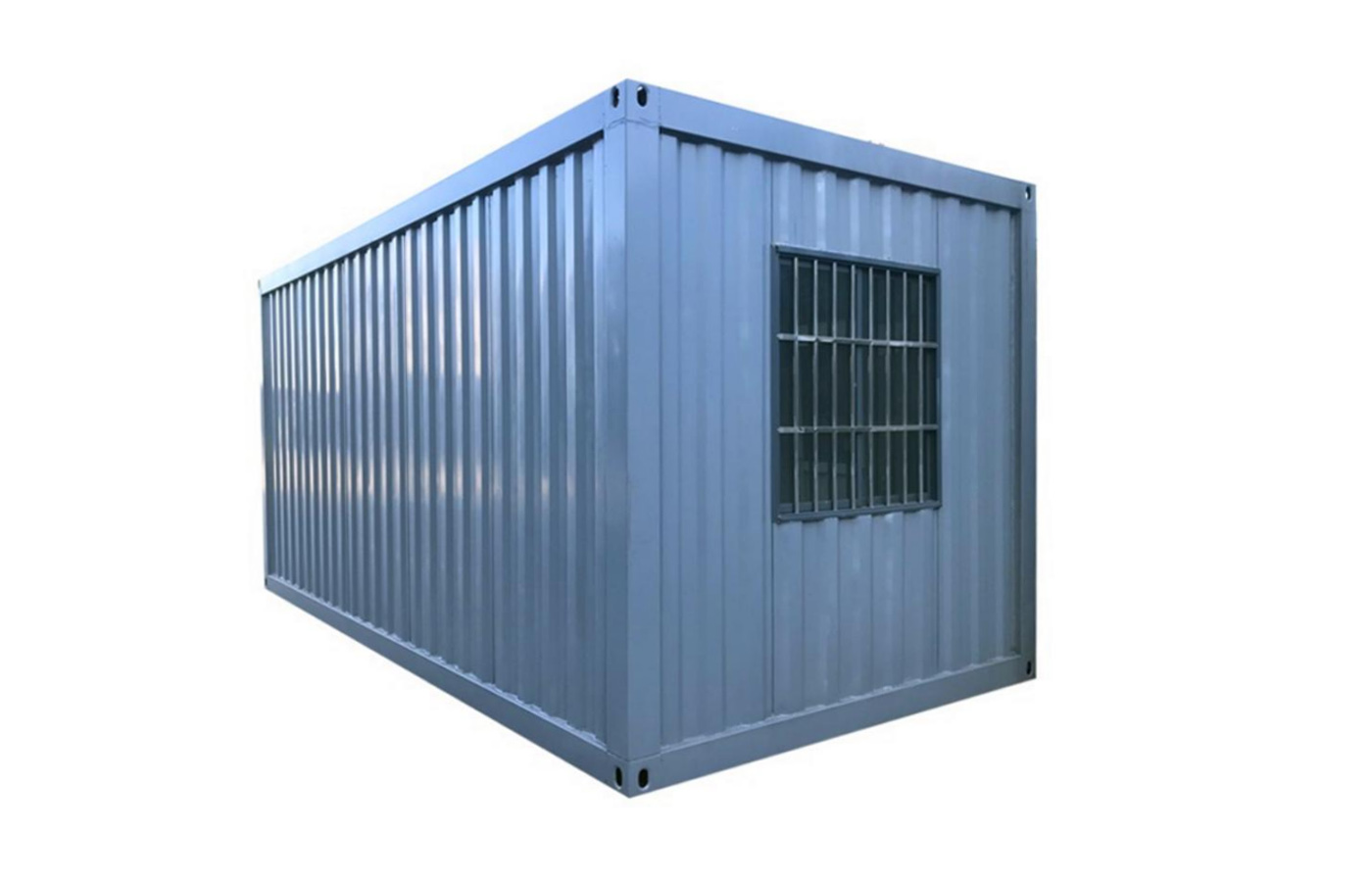 Solid Prefabricated Corrugated Container House Portable Warehouse For TransportationSucceed Certificate by CE, SGS, ISO 9001, etc.View Product →
What to Verify Before You Place an Order
A portable container structure is only as reliable as the factory that produced it. Before ordering, verify four things.
- Production history: A factory with years of experience in this field, such as Shanghai Allstar Industrial Co., Ltd., which has produced portable steel units since 2006, usually understands export packing, panel tolerances, and connection details far better than a broker.
- Production equipment: A proper roll-forming line, welding stations, and a painting booth are the basic requirements for a consistent product.
- Certification documents: Ask for the exact certificates and the standards they reference. "Complete certifications" is a claim until the paperwork is in your hand.
- Export experience: Check how the supplier packs and braces the structure for sea freight. A well-braced flat-pack arrives with square frames and intact panels; a poorly packed one arrives bowed and unusable.
Quick Reference: Portable Container Structure Types
| Type | Setup time | Packed volume | Best use |
|---|---|---|---|
| Folding | 2-4 hours | 20-25% of open volume | Work site offices, emergency housing |
| Flat-pack | 4-8 hours | 15-20% of open volume | Long-distance export, multi-unit projects |
| Expandable | 3-6 hours | 30-40% of open volume | Retail, hotels, family living |
| Detachable | 1-2 days | 25-35% of open volume | Large dormitories, team housing |
Remember that the times above assume a level ground and a team of two to four workers. A prepared foundation and reliable lifting equipment can reduce the setup window further.
Frequently Asked Questions
Q1: What is the setup time for a 20ft folding container house?
A 20ft folding container house can typically be set up in about 2 to 4 hours by a small crew, assuming the ground is level. The folding mechanism is designed so the floor and walls pivot into place and lock. Electrical connections and interior fixtures can add time but do not change the shell erection.
Q2: Do portable container structures meet local building codes?
This depends on the classification. Some countries treat portable structures as temporary and apply lighter rules; others require insulation, electrical, and fire-resistance standards similar to permanent buildings. In both cases, the manufacturer must provide the relevant test data. Inspectors also care about how the foundation sits on the ground.
Q3: How long does a portable container structure last?
With proper anti-corrosion coating and routine maintenance, a well-built steel portable container structure can last 20 years or more. The actual lifespan is often less about the frame and more about the coating system, the local climate, and how often the unit is moved.
News
GET A QUOTE
Contact Us Now

We can do OEM and ODM to meet all your detailed requirements. Allstar will be your choice. You are warmly welcome to visit and consult!
Our Product
Quick Links
Contact Information
- Add: No.218, Calle Xinlou, Pueblo de Qutang, Ciudad de Haian, Provincia de Jiangsu, China.
- E-mail: [email protected]
- Phone: +86-21-67353838
+86-513-88798719
Copyright © 2025 Shanghai Allstar Industrial Co., Ltd. All Rights Reserved.
Customized One-Stop Service Container House Suppliers
 Privacy
Privacy
