 English
 Español
 عربى
عربى1. Space Efficiency: How Does an Expandable Container House Maximize Living Area? Expandable container houses are a re...
READ MOREHow to Build a Container House from Scratch: A Complete Structural Guide
Update:18 Jun 2026
Financial and Feasibility Analysis of Container Construction
Evaluating the cost to build a shipping container house requires a granular understanding of both raw material procurement and site specific deployment variables. Unlike traditional timber framing or concrete block methodologies, utilizing standardized modular steel structures fundamentally alters the capital allocation timeline. Initial expenses are heavily weighted toward land preparation, structural reinforcement, and heavy machinery rental, whereas traditional construction projects distribute expenses across extended masonry and framing schedules. Investors, developers, and owner builders must thoroughly analyze how structural modifications impact overall financial viability before purchasing decommissioned cargo boxes or custom engineered units.
Statistical distributions of project budgets indicate that a baseline procurement of structural steel units comprises approximately twenty to thirty percent of the total expenditure. The remaining capital is distributed across foundational engineering, localized thermal management systems, interior spatial development, and municipal utility integration. To maximize structural efficiency and lower onsite welding expenses, many current architectural projects incorporate a specialized fixed container house structural format to establish rigid permanent layouts that simplify continuous load path tracking across multi floor developments. This strategic planning prevents unforeseen expenses related to structural sag or alignment failures during heavy lifting operations.
Estimated Capital Distribution for Steel Modular Projects
The financial breakdown below illustrates the typical allocation of capital resources when execution follows standardized engineering guidelines without unexpected site impediments or severe environmental complications.
| Expense Category | Percentage Allocation | Primary Cost Drivers |
|---|---|---|
| Structural Units Purchase | 25 percent | Grade tier, delivery logistics, dimensions |
| Foundation and Sitework | 15 percent | Excavation, concrete volume, soil stability |
| Framing and Cutouts | 15 percent | Structural reinforcements, welding labor, steel beams |
| Insulation and MEP Systems | 25 percent | Closed cell spray foam, plumbing, electrical grid |
| Interior Finishing | 20 percent | Drywall, flooring, cabinetry, fixture installation |
When analyzing the broader global market for residential container houses, long term durability serves as a primary financial justification for this methodology. The inherent rigidity of weathering steel architecture minimizes standard maintenance costs associated with moisture infiltration, wood boring insects, and structural settling. Consequently, understanding the complete lifecycle budget allows developers to optimize structural modifications without compromising structural integrity or exceeding initial fiscal boundaries. This comprehensive financial overview establishes the baseline feasibility necessary to progress toward architectural configuration and individual module selection.
Architectural Configurations and Module Selection
Selecting the appropriate structural baseline is an essential phase in making a container house that successfully withstands environmental stresses, high wind loads, and seismic activities. The global logistics industry relies primarily on two dimensional standards: twenty foot and forty foot units, both available in standard heights or high cube variations. High cube modules provide an additional foot of vertical clearance, which proves absolutely vital once overhead utility tracking, HVAC ventilation ductwork, and deep floor insulation layers are integrated into the interior residential envelope.
Architects and engineers generally differentiate between specific structural fabrications depending on the intended load bearing application. For multi tiered architectural layouts requiring high rigidity and exact stacking tolerances, a fixed container house framework provides enhanced corner post stability, ensuring that vertical load paths align precisely across stacked units without requiring extensive external structural beams. Conversely, projects requiring traditional ribbed sheet steel aesthetics and localized flexibility often utilize a corrugated container house configuration. The continuous wave pattern of corrugated paneling provides exceptional shear resistance along the longitudinal axes, though it requires specific reinforcement strategies when horizontal sections are excised for expansive windows or sliding doors.
Structural integrity is also heavily governed by the historical usage classification of the shipping containers. One Trip containers are manufactured in advanced overseas foundries, loaded with a single commercial cargo shipment, and then sold immediately into the regional architectural construction market. These premium modules exhibit minimal structural deflection, zero rust pitting, and perfectly square corner castings, making them highly predictable during assembly. Used cargo boxes, categorized as Cargo Worthy or Wind and Watertight, present a much more economical entry point for builders but require meticulous physical inspection for internal structural fatigue, localized planar deviations, and toxic chemical residues originating from industrial pest management floor coatings. Proper selection reduces subsequent modification overhead and guarantees a stable building shell.
Shipping Container Engineering and Site Preparation
Before executing any physical adjustments or cutting into the steel panels, prospective builders must prioritize professional shipping container engineering to guarantee safety, structural longevity, and local regulatory compliance. Shipping containers are precisely engineered to bear immense vertical loads when stacked corner post to corner post within high density cargo vessels. However, they are not natively designed by maritime manufacturers to withstand lateral earth pressures, soil backfilling, or irregular point loads resulting from custom architectural cantilevers, asymmetric roof decks, or expansive room extensions. A licensed structural engineer must compute the precise load distributions and establish localized safety factors, especially when modules are placed in regions prone to heavy seismic activity, extreme wind pressures, or substantial winter snow accumulations.
Developing a robust foundation for container house projects represents the critical engineering point where the rigid steel architecture interfaces with the ground strata. Traditional concrete slab foundations can be utilized successfully, but alternative specialized foundation methods often provide superior cost performance, rapid installation timelines, and excellent structural isolation from subsurface moisture. Let us thoroughly analyze the primary engineering choices available to modern builders:
- Concrete Pier Foundations: Deep concrete piers are cast at each of the four primary corner castings of the container module. This configuration ensures that the primary weight concentration points are anchored directly into solid load bearing soil strata while elevating the steel floor away from direct moisture contact and ground pests.
- Helical Piles: Heavy industrial steel screw shafts are driven mechanically deep into the subsoil layers until reaching verified torque resistance. This modern methodology minimizes surface environmental disruption, eliminates the extended curing time required by traditional concrete mixes, and provides exceptional tension and compression resistance against high wind uplift forces.
- Continuous Strip Foundations: Reinforced concrete perimeters are poured continuously underneath the outer boundaries of the structural modules. This approach provides uniform support along the entire length of the lower side rails, which is highly beneficial when heavy interior partitions, large kitchen counters, or extensive masonry finishes are planned.
Site accessibility must also be evaluated concurrently with foundational engineering design. Heavy cranes, multi axle delivery trucks, and heavy duty forklift equipment require stabilized approach paths, overhead clearance from power lines, and solid ground conditions to position forty foot steel units precisely onto the pre-installed anchor bolts without displacing the foundation alignment. Subsurface soil compaction testing and comprehensive grading must be completed beforehand to prevent uneven settling over time, which would otherwise cause doors to jam, windows to bind, and welded structural joints to experience excessive shear stress.
Structural Framing and Modifications
Executing precise structural cutouts is the defining phase in converting a raw industrial cargo box into an elegant, habitable residential space. When adhering to detailed DIY container home plans, builders must understand that removing any portion of the corrugated side panels significantly compromises the global structural integrity of the individual module. The corrugated side panels act as the integrated shear web of a large hollow girder beam; hence, whenever a window, doorway, or open concept room expansion opening is created, alternative structural reinforcement must be integrated immediately into the building shell.
The methodology for container home framing generally utilizes structural steel hollow structural sections or heavy gauge cold formed steel studs welded or bolted directly to the interior perimeter tracks. Traditional timber framing is sometimes utilized to reduce immediate material costs, but steel framing tracks identical thermal expansion and contraction coefficients as the outer weathering steel shell, effectively preventing long term warping, drywall cracking, and fastener failure. Let us examine the exact technical sequence required for reinforcing a typical side wall cutout:
- Mark the precise, engineered dimensions of the planned cutout onto the interior face of the corrugated steel panels using high precision laser leveling tools and industrial marking dyes.
- Tack weld temporary structural steel supports, adjustable jacks, or heavy duty bracing members across the ceiling and floor tracks to prevent roof sagging during the active cutting phase.
- Utilize an industrial plasma cutter, heavy duty oxy acetylene torch, or specialized gas powered circular saws to remove the targeted corrugated steel sections cleanly and safely.
- Install a permanent rectangular frame composed of structural steel square tubing around the entire perimeter of the new opening, executing full penetration welds to ensure continuous load transmission to the foundation corner posts.
- Remove the temporary support elements and bracing mechanisms once the perimeter frame has fully cooled and passed rigorous visual weld inspections and non destructive testing.
Interior partition framing can proceed immediately after the primary structural modifications are fully stabilized. Non load bearing walls should ideally be isolated from the upper roof assembly using specialized slip track headers, allowing the exterior container roof to flex naturally under heavy snow loads or live roof deck loads without transferring crushing structural stress down into the interior residential partition walls and finished drywall panels.
Step-by-Step Construction and Installation Workflow
Mastering the sequence of events of how to build container house configurations ensures that separate construction trades and installation phases do not conflict or compromise previously finished architectural elements. The physical workflow must progress logically from heavy industrial steelwork down to precise interior finishing work. Skipping critical inspection steps, neglecting exterior moisture management, or installing interior utilities prematurely can lead to severe moisture retention issues, hidden structural corrosion, and costly municipal code non compliance.
The comprehensive step by step roadmap for understanding how to build container homes includes the following chronological milestones designed to keep the project on schedule and within budget parameters:
Step 1Procurement and Engineering Authorization: Secure certified structural engineering schematics, complete soil testing, and obtain necessary municipal building permits based on localized zoning ordinances and building codes.
Step 2Foundational Engineering and Excavation: Pour reinforced concrete piers, set continuous strip footings, or install helical steel piles, ensuring all upper steel anchor plates align perfectly with standard international container dimensions.
Step 3Module Placement and Mechanical Anchoring: Deploy heavy mobile cranes to lift the container units onto the prepared foundations, followed by immediate structural perimeter welding or high strength twist lock engagement to secure the modules permanently.
Step 4Structural Openings and Perimeter Reinforcement: Cut necessary window, door, and open layout passages while simultaneously installing structural steel hollow structural section frames to reinforce the weakened load paths.
Step 5Weatherproofing and Roof Membrane Deployment: Apply continuous commercial grade elastomeric coatings, seal all structural weld points with zinc rich primers, or construct a secondary pitched truss roof system to eliminate water pooling on the flat steel roof.
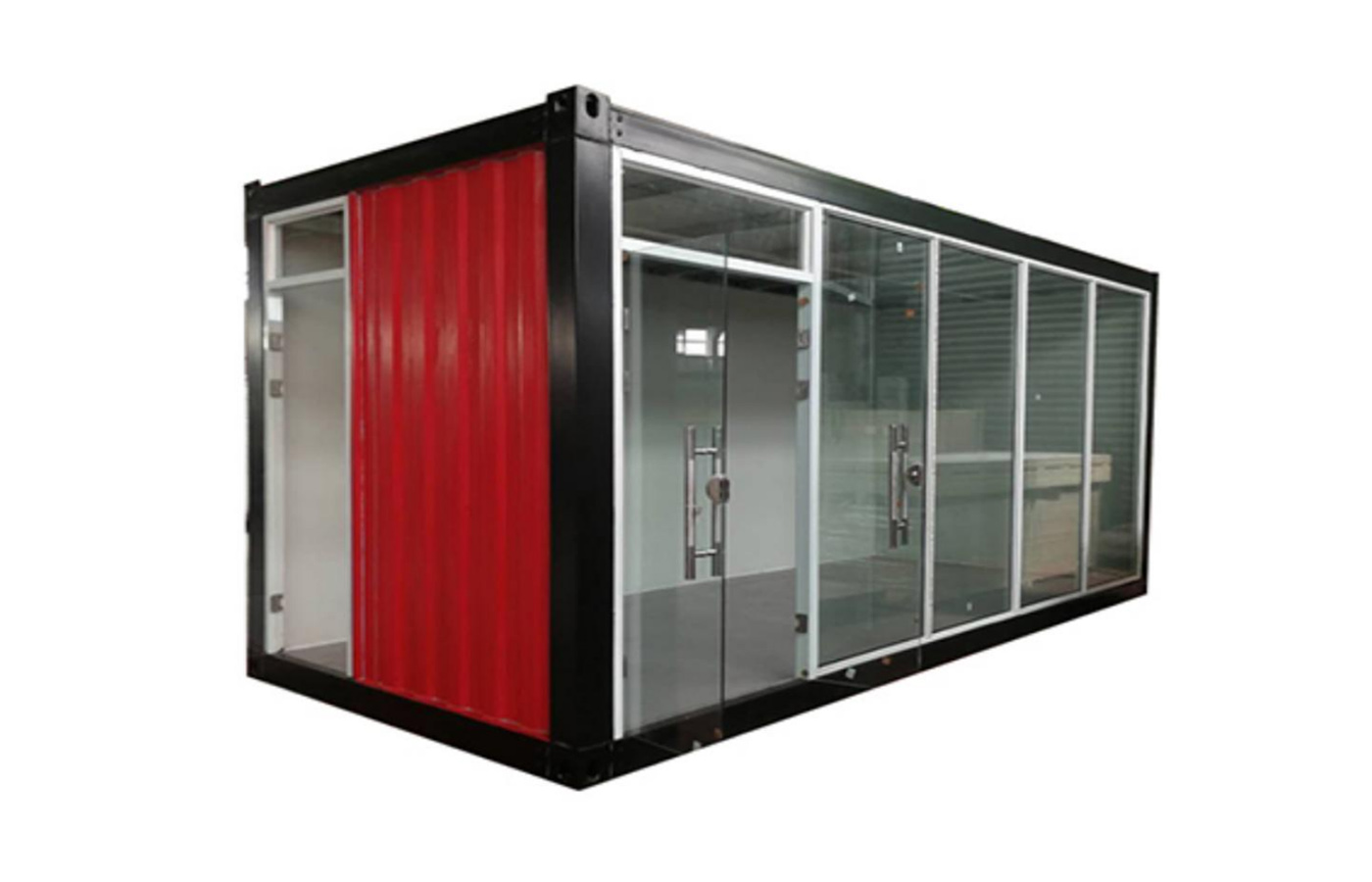
Once the exterior envelope is entirely secure against environmental elements, the modular construction project transitions smoothly into interior development. This includes mechanical, electrical, and plumbing rough ins, which must be carefully routed through pre drilled framing studs to avoid excessive penetration of the structural floor beams or exterior weathering steel skin. Inspections from local building authorities must be passed before closing the walls with high performance insulation materials.
Thermal Insulation and Moisture Mitigation
Managing thermal performance and internal moisture levels represents one of the most critical technical obstacles when building permanent residences with corrugated steel containers. Steel possesses extremely high thermal conductivity, meaning that without an engineered thermal break, interior living spaces will mirror external ambient temperature fluctuations, leading to massive heating and cooling energy expenditure. Furthermore, cold metal surfaces prone to temperature differentials create a high risk environment for condensation. When warm, humid interior air contacts a cold, uninsulated steel wall, moisture condenses instantly behind the wall cavities, promoting structural rust, degradation of framing studs, and toxic mold formation.
To prevent these systemic problems, designers and builders must avoid traditional fiberglass batt insulation placed directly against the bare steel panels. The optimal solution is the application of closed cell polyurethane spray foam directly onto the interior surface of the corrugated steel panels. Closed cell foam expands rapidly upon application, filling every crest and trough of the corrugation, which creates a seamless vapor barrier and insulation layer that eliminates air gaps entirely. Alternatively, advanced exterior insulation finishing systems can be installed, wrapping the steel structure completely from the outside, which preserves the entire interior square footage for the living areas and protects the steel shell from environmental thermal shock cycles.
Frequently Asked Questions
Q1: How long do steel container homes typically last under standard environmental conditions?
With high quality structural coatings, zinc rich primers, and appropriate moisture mitigation systems, a steel modular residence can last upwards of fifty years. Regular maintenance of the external paint layers, protecting structural weld points from oxidation, and ensuring proper foundation drainage are critical to achieving this extended lifespan.
Q2: Is it possible to stack multiple corrugated containers without adding separate structural columns?
Yes, standard cargo modules can be stacked up to nine units high when fully loaded, provided that the weight is transferred directly through the reinforced corner posts. If containers are stacked crosswise, staggered, or out of alignment with the corner posts, secondary structural steel columns and cross beams must be introduced to distribute the loads safely.
Q3: What insulation material provides the best protection against interior condensation?
Closed cell polyurethane spray foam is the industry standard because it adheres directly to the weathering steel panels, creating a solid air barrier and vapor retarder that prevents moisture from reaching the cold metal surface. This eliminates the dew point pocket entirely within the finished wall assembly.
Q4: How do municipal building departments typically classify container structures?
Most jurisdictions classify them under modular, prefabricated, or alternative residential construction codes. The structural framing plans and modification drawings must usually carry a formal stamp from a licensed structural engineer certifying compliance with local wind, snow, and seismic loading requirements before permits are issued.
Q5: Can I build a basement underneath a modular container residence?
Yes, a standard masonry or poured concrete basement foundation can be engineered to support container homes. The top deck of the concrete basement walls must include cast steel anchor plates embedded into the concrete so that the container corner castings can be welded or mechanically fastened securely with industrial twist locks.
News
GET A QUOTE
Contact Us Now

We can do OEM and ODM to meet all your detailed requirements. Allstar will be your choice. You are warmly welcome to visit and consult!
Our Product
Quick Links
Contact Information
- Add: No.218, Calle Xinlou, Pueblo de Qutang, Ciudad de Haian, Provincia de Jiangsu, China.
- E-mail: [email protected]
- Phone: +86-21-67353838
+86-513-88798719
Copyright © 2025 Shanghai Allstar Industrial Co., Ltd. All Rights Reserved.
Customized One-Stop Service Container House Suppliers
 Privacy
Privacy
